

Tuesday, November 6, 2012


Wednesday, October 17, 2012
Tana River Delta, Kenya added to the Ramsar List
The Secretariat is very pleased to announce that Kenya has designated
the Tana River Delta as a Wetland of International Importance. As
summarized by Ramsarâ??s MS Ako Charlotte Eyong, from the accompanying
RIS, the Tana River Delta Ramsar Site (163,600 hectares, 02°27â??S
040°17â??E), an Important Bird Area (IBA) in Coast Province, is the
second most important estuarine and deltaic ecosystem in Eastern
Africa, comprising a variety of freshwater, floodplain, estuarine and
coastal habitats with extensive and diverse mangrove systems, marine
brackish and freshwater intertidal areas, pristine beaches and shallow
marine areas, forming productive and functionally interconnected
ecosystems.
 This diversity in habitats permits diverse hydrological functions and
a rich biodiversity including coastal and marine prawns, shrimps,
bivalves and fish, five species of threatened marine turtles and IUCN
red-listed African elephant (Loxodonta africana), Tana Mangabey
(Cercocebus galeritus), Tana River Red Colobus (Procolobus
rufomitratus rufomitratus) and White-collared Monkey (Cercopithecus
mitis albotorquatus). Over 600 plant species have been identified,
including the endangered Cynometra lukei and Gonatopus marattioides.
As one of the only estuarine staging posts on the West Asia - Eastern
Africa coastal flyway, it is a critical feeding and wintering ground
for several migratory waterbirds such as waders, gulls and terns. The
main human activities include fishing, small-scale family-oriented
agriculture, mangrove wood exploitation, grazing, water supply,
tourism and research (ongoing research on the protection and
monitoring of breeding turtles and the conservation of dugongs).
Kenya presently has six Ramsar Sites, covering an area of 265,449 hectares.
Best regards, Dwight Peck, Ramsar.
***********
Dwight Peck
Documentation Officer
Convention on Wetlands (Ramsar, Iran, 1971)

Friday, October 5, 2012
Soda ash mining at Lake Natron is not economically viable
Mining of soda ash at Lake Natron in Northern Tanzania is not economically viable, experts have warned. A new Cost Benefit Analysis report shows that projected return on investment over the next 50 years would be a loss of between $44,354,728 and $492,142,797, even if exempted from paying tax by the Government.
Read the whole story at Birdlife

 All Photos: Copyright Stein Ø. Nilsen / tromsofoto.net


Monday, February 27, 2012
Fantastic chamaleons from Madagscar
These tiny little creatures are found recently in Madagscar, really neat!
 Read the whole story at AfriCam

Tuesday, February 7, 2012
February Gaps 2012
Visit one of these squares and make notes of what you see and hear!
Make an effort for the birds of Tanzania!
Send your records to tzbirdatlas@yahoo.co.uk


Monday, February 6, 2012
BirdLife welcomes passing of law to secure transboundary ecosystems in East Africa
Fri, Feb 3, 2012
Africa, News Posts, Top Posts
The Serengeti National Park is home to one of the last world’s last great mammal migration (amanderson2/flickr)
The East African Legislative Assembly (EALA) has passed a crucial law that could transform how transboundary ecosystems and resources in East Africa are managed. EALA is the legislative arm of the East African Community, a regional block bringing together five countries, namely, Tanzania, Kenya, Uganda, Rwanda and Burundi.
Hon. Dr. George Nangale, the former Chairman of the Committee on Agriculture, Natural Resources and Tourism at EALA, and who moved the bill in 2008 was delighted to see it enacted. “I am glad to see this landmark bill go through, many thanks for the support from all stakeholders,” he said.
The new law is considered critical since it establishes a mechanism for addressing developments of a transboundary nature that affect shared ecosystems. Among other things, it establishes a Commission that will supervise and monitor the implementation of policies on the management of such resorces. It emphasises the need for Environmental Impact Assessment of projects with impacts of a transboundary nature, with the Commission playing a key role in the approval process.
 “This is a welcome development. East African countries now have a good chance to collaborate and share information on development projects of a transboundary nature. It will no longer be business as usual” Said Mr. Deo Gamassa, the new CEO of the Wildlife Conservation Society of Tanzania (BirdLife in Tanzania).
The new regional legal framework is set to benefit transboundary ecosystems like Lake Natron and Serengeti National Park which, in the recent past, have drawn global attention as a result of proposed large scale development projects.
At Lake Natron, the National Development Corporation proposed to build a $ 450 million soda ash plant to produce half a million tonnes of industrial sodium bicarbonate per year. However, concerned groups raised concerns, citing the sensitivity of Lake Natron as the only regular breeding site for Lesser Flamingos in Eastern Africa. Three quarters of the global population of the pink birds are hatched at Lake Natron -read more.
The Transboundary Ecosystems Management Bill 2010 was passed on 31 January 2012 at EALA’s Third meeting of the Fifth Session taking place in Kampala, Uganda.

Wednesday, February 1, 2012
Mystery bird sounds of Tanzania
Hope someone out there can help ID some of the species I've recorded in Tanzania.This one from Mazimbu area in Morogoro town.
And this is recorded in the foothills of Usambara Stein
And this is recorded in the foothills of Usambara Stein
Wednesday, January 11, 2012
New viper snake species found in Tanzania!
The newly discovered snake, named Matilda's horned viper, has been described
in the journal Zootaxa.
The exact location of the new species is being kept a secret, because it could be of interest to the illegal pet trade.
Campaign group the Wildlife Conservation Society said the snake's habitat, estimated at only a several square km, is already severely degraded from logging and charcoal manufacture.
See the whole story at BBC
Saturday, January 7, 2012
Birding in Tanzania?
Bring with you a checklist containing 1105 species found in this magnificent birding location!
You find it here as PDF
You find it here as PDF
 |
| Roughwing, Kilimanjaro South Photo: Stein Ø. Nilsen |
Tuesday, January 3, 2012
Levant Sparrowhawk - observed in Ngorongoro,Tanzania
The 22nd November 2011 me and my family was heading for Ndutu lodge via the Ngorongoro crater. Due to heavy rain the days before the road conditions were so and so, and we were quite alone in the crater. Doing our way over the bottom of the crater we stopped for a lone elephant bull, and there to the left of us we observed a slimlooking young hawk perched in a thorn bush. 6-7 quick photos and the bird was gone, no views of the front and just knowing this was something we never saw before.
On our return to Northern Norway a quick look at the photos I was still uncertain of the ID and sent 2 photos to Ron Eggert tanzaniabirds.com and he sent it further to africanraptors and Rob Davies.
They concluded this is a fine young Levant Sparrowhawk A. brevipes. Thanks to Ron and Rob for the help with checking this out!
Checking Britton 1980 I soon found out this is a mega finding for Tanzania, 1-one historic record in W Tanzania only, and only four for Kenya! Only a handful records for Tanzania the last years (one Jan 2010, Neil and Liz Baker) and East-Africa makes this a very nice bird to see.
Observers: Stein Ø. Nilsen, Tone Malm and Stine Malm Nilsen
See all the photos at tromsofoto.net
Copyright: Stein Ø. Nilsen 2011


Monday, January 2, 2012
Great news for TZ Wildlife!
Natural Resources and Tourism minister
Ezekiel Maige (September 2011)
The government has banned the capture,
importation and exportation of wild animals with effect from this month,
specifying that the order does not cover insects.
A December 9, 2011 Government Notice,
copies of which were distributed to the media yesterday by the Natural Resources
and Tourism ministry, requires all licensed traders whose permits were still
valid by August 18 this year to make sure that they exported their animals
within three months from the date of the notice.
A press statement issued by the ministry
in Dar es Salaam yesterday said the move is in partial implementation of The
Wildlife Conservation (Capture of Animals) (Prohibition) Order,
2011.
It however said Tanzanians remain at
liberty to use wild animals and related products for non-business activities
including research in the national interest.
According to the statement, the timeframe
provided to businesspersons to sell wildlife animals they legally own was in
accordance with the Wild animals Capture Regulations of 2010 as published in
issue No. 244 (July 2, 2010) of the Government Gazette.
It said sections 12 (4) and (5) of the
regulations state that all captured animals ought to be sold within a period not
exceeding 90 days since their capture.
Meanwhile, the ministry said it is still
investigating the circumstances of late last year’s illegal shipping of 116 wild
animals to foreign countries.
The saga over the scandal, which revolves
around the controversial transportation of four giraffes and 16 wild birds worth
some 170.57m/- aboard a Qatari military plane, unfolded on November 24 last
year.
The government subsequently suspended
Wildlife Division Director Obeid Mbangwa to pave the way for investigations into
the scandal.
Natural Resources and Tourism minister
Ezekiel Maige was later quoted as telling the National Assembly that two other
senior officials in the division were sent on paid leave pending investigations
into their alleged involvement in the scam.
He said the ministry intervened after
failing to get satisfactory explanation on the manner in which the shady
shipment of the wild animals was handled.
Prime Minister Mizengo Pinda later told
the National Assembly that the government had slapped a ban on the export of
live wild animals.
He said that was meant to allow the
government time to devise new procedures and conditions governing export trade
in live animals export trade, including a thorough review of the relevant
fees.
The PM explained the move was necessary
because it was apparent that dishonest animal dealers were routinely
short-changing the government and ending up with windfall
profits.
He said the government would also draw up
a list of wild animals which could be exported.
The clandestine export of live wild
animals was the subject of heated debate as Members of Parliament deliberated on
the 2011/2012 Budget estimates of the Natural Resources and Tourism ministry,
with the parliamentary Lands, Natural Resources and Environment committee saying
the government was shielding those behind the illegal business.
 |
| Grey-breasted Spurfowl is endemic to Tanzania, maybe it now is safe for beeing traded? Photo: Stein Ø. Nilsen |
Tuesday, December 27, 2011
Madagascar Bee-eaters Usambara Foothills 2 Dec 2011
These 3 Mad. Bees were captured feeding actively near a riverbed in the Usambara foothills


Booted Eagle Usambara Foothills 2 Dec 2011
This Booted Eagle (Dvergørn) Light phase was observed near Mombo viewpoint.


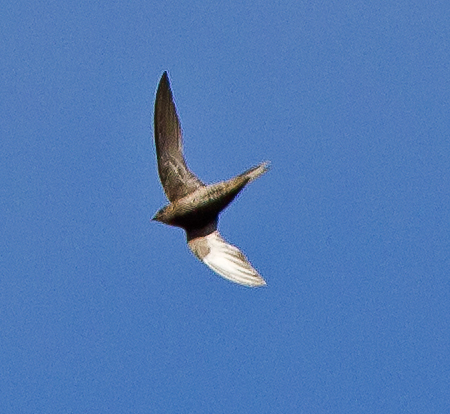
Swifts from Usambara foothills 2. Dec 2011
These 3 series of swift photos from the foothills below Mambo viewpoint were taken early in the morning with Canon 7D and 300/2.8L IS. Please comment on photos!


 Swift 2




Thursday, November 10, 2011
Rare TZ species -5 individuals or less
This shows rare species in Tanzania with 5 or less observations. If YOU have seen one of them please tell us when and where!
| Britton no | species | ||
| 6 | 1 | Jouanin's Petrel | |
| 15 | 1 | Brown Booby | |
| 16 | 1 | Red-footed Booby | |
| 273 | 1 | Long-toed Stint | |
| 302 | 1 | Long-tailed Skua | |
| 308 | 1 | Slender-billed Gull | |
| 319 | 1 | Black Tern | |
| 421 | 1 | Sokoke Scops Owl | |
| 428 | 1 | Long-tailed Nightjar | |
| 511 | 1 | White-thighed Hornbill | |
| 711 | 1 | Joyful Greenbul | |
| 923 | 1 | White-browed Crombec | |
| 9001 | 1 | Shy Albatross | |
| 9005 | 1 | Black-naped Tern | |
| 9082 | 1 | Black-collared Eremomela | |
| 9086 | 1 | Masked Shrike | |
| 9087 | 1 | Rubeho Sunbird | |
| 9090 | 1 | Black-bellied Storm Petrel | |
| 9092 | 1 | Wedge-tailed Shearwater | |
| 9096 | 1 | Wilson's Storm Petrel | |
| 9097 | 1 | Great Skua | |
| 9098 | 1 | Cape Gull | |
| 37 | 2 | Western Reef Heron | |
| 74 | 2 | Tufted Duck | |
| 141 | 2 | Swallow-tailed Kite | |
| 192 | 2 | Black-rumped Button Quail | |
| 209 | 2 | Striped Flufftail | |
| 212 | 2 | Long-toed Flufftail | |
| 251 | 2 | Black-headed Plover | |
| 269 | 2 | Red Knot | |
| 303 | 2 | Arctic Skua | |
| 842 | 2 | Papyrus Yellow Warbler | |
| 877 | 2 | Yellow-vented Eremomela | |
| 1063 | 2 | Chestnut-winged Starling | |
| 1093 | 2 | Orange-tufted Sunbird | |
| 1247 | 2 | White-breasted Negrofinch | |
| 1252 | 2 | Red-fronted Ant-pecker | |
| 9002 | 2 | Giant Petrel | |
| 9071 | 2 | Cape Shoveler | |
| 9094 | 2 | Malagasy Heron | |
| 108 | 3 | Eurasian Sparrowhawk | |
| 157 | 3 | Barbary Falcon | |
| 266 | 3 | Jack Snipe | |
| 304 | 3 | Pomarine Skua | |
| 440 | 3 | Standard-winged Nightjar | |
| 446 | 3 | Forbes-Watson's Swift | |
| 533 | 3 | Grey-throated Barbet | |
| 676 | 3 | Mountain Illadopsis | |
| 684 | 3 | Brown Babbler | |
| 926 | 3 | Sooty Flycatcher | |
| 959 | 3 | Yellow-bellied Wattle-eye | |
| 1234 | 3 | Black-rumped Waxbill | |
| 9020 | 3 | Angola Lark | |
| 9023 | 3 | Jackson's Pipit | |
| 9043 | 3 | Southern Black Tit | |
| 73 | 4 | Northern Pochard | |
| 103 | 4 | Levant Sparrowhawk | |
| 191 | 4 | Quail Plover | |
| 638 | 4 | Mascarene Martin | |
| 956 | 4 | Shrike Flycatcher | |
| 1097 | 4 | Blue-throated Brown Sunbird | |
| 1174 | 4 | Black-billed Weaver | |
| 9013 | 4 | European Scops Owl | |
| 9083 | 4 | Rubeho Akalat |
Wednesday, October 12, 2011
No soda ash mining at Lake Natron without addressing environmental concerns, affirms Tanzania’s Director of Environment
From BIRDLIFE
In an emphatic declaration of Tanzania’s keen interest to ensure that development takes environmental issues into consideration, the Vice President’s Office has affirmed that it will not compromise its position on environmentally damaging projects.
Tanzania’s Director of Environment in the Vice President’s Office, Dr Julius Ningu, toldThe Guardian on Sunday and the Tanzania Broadcasting Corporation (TBC) in an interview that “the government position for this particular site [Lake Natron] is to maintain [the] ecological system so that flamingos continue to breed … When we talk of sustainable use of natural resources, we mean for the benefit of current and future generations, now extraction of soda ash for sure can’t be beneficial to the future generations.” See full story at http://www.ippmedia.com/frontend/index.php?l=34206
 |
| 75% of the world Lesser Flamingo's breed at Lake Natron Photo:Stein Nilsen, Tromsofoto.net |
BirdLife welcomes the progressive views expressed recently by the Government of Tanzania in the management of natural resources, both in safeguarding the world-famous Serengeti National Park, and now the Lake Natron Ramsar site.
In 2006, the Tanzanian Government and the Indian company Tata Chemicals put forward proposals to build a large-scale industrial plant, supported by an extensive road and rail infrastructure, to extract soda ash from Lake Natron’s water. Following a global campaign orchestrated by the Wildlife Conservation Society of Tanzania (WCST, BirdLife in Tanzania), Tata withdrew from the project in 2008. But the National Development Corporation (NDC), a government agency, is leading a renewed push to reinstate the project.
Monday, October 10, 2011
CDM Carbon Sink Tree Plantations - A case study in Tanzania
final Timberwatch Tanzania CDM Tree Plantation report is now available!
In December 2009, Timberwatch released a preliminary report titled: Potential Impacts of Tree Plantation Projects under the CDM - An African Case Study.
After visits to the site of the proposed Idete CDM tree plantation project in southern Tanzania in 2010, and gathering additional information, the findings have been documented in this comprehensive 90-page report with numerous photographs.
CDM Carbon Sink Tree Plantations - A case study in Tanzania - Overview:
This new report provides greater insights into the motives and activities of the Norwegian owned company Green Resources Ltd (GRL), in the Mufindi district of Iringa province in southern Tanzania.
It tackles questions concerning the sustainability and economic viability of alien invasive tree plantations, as carbon emission offset projects under the Clean Development Mechanism (CDM) of the Kyoto Protocol (KP).
The report describes a proposed, though already partially planted, CDM tree plantation project at Idete, from which GRL hopes to earn Certified Emission Reductions (CERs). The company hoped to sell the carbon credits from establishing alien pine and eucalyptus plantations in biodiverse grasslands described by GRL as ‘degraded’, to the government of Norway. To earn CERs under the CDM, it should be shown that the project would not have been financially viable without income from the sale of CDM carbon credits. This report challenges assumptions used to justify claims that the project will be a net carbon sink over its lifetime, showing that the opposite is more likely to be the case.
There are contradictions in the role of the government of Norway, as a major oil producer and exporter through Statoil, contributing substantially to global greenhouse gas (GHG) emissions, while financing an environmentally destructive plantation sink project. It has entered into an agreement with GRL to purchase 400 000 carbon credits, subject to the Idete plantations receiving CDM temporary CERs. On the other hand, Norwegian public funds have also been invested in Green Resources Ltd.
Norway wishes to occupy high moral ground and therefore seeks to align itself with progressive policies in social, environmental, human rights and other development issues. In view of the need to address climate change, Norway has committed itself to mitigation projects around the world, seeking to buy more than 6 000 000 carbon credits. The GRL plantations therefore represent an important political investment for the Norwegian government.
Timberwatch has studied the social, cultural, political and economic impacts of industrial tree plantations in South Africa and Swaziland, and has concluded that monoculture tree plantations are non-sustainable from many points of view, even with market-based conservation measures such as Forest Stewardship Council (FSC) certification in place. This research showed major problems with land being alienated from displaced local communities, poor working conditions, the destruction of biodiversity resources upon which communities depend, reduced water availability, and many other direct and indirect effects that impact negatively on local livelihoods.
 The industrial tree plantation model is designed to support corporate financial accumulation through so-called ‘economy of scale’ but it ignores their negative effects especially heavy water use and biodiversity loss. Large-scale tree plantations often cause the economic and social marginalisation of local communities. In this instance, the governments of Norway (via GRL) and Tanzania do not appear to have ensured meaningful decision-making for the affected communities. Despite institutional mechanisms being intended to facilitate participation, in reality they serve little purpose other than to green wash. Full and free prior informed consent (FPIC) principles do not appear to have been followed.
Good intentions in project founding and establishment documents are not implemented on the ground. This does not necessarily worry the governments and the companies involved as it also means greater profits. It is clear that the government of Tanzania lacks capacity to protect affected communities from abuse and marginalisation during the course of the project. It seems that the government of Tanzania could have agreed to this type of project in the hope of receiving foreign investment in the short term, whilst ignoring long term social and environmental issues.
Another concern is that equitable distribution of income from foreign investment projects is not a strong point of developing country governments. Very rarely do taxes and deductible benefits accruing from a project sanctioned and coordinated at the national level get back to the local communities affected by the activity. This is true of many African countries besides Tanzania and strengthens the case for community self-determination and management of community-business relations. Where this is not possible, mechanisms could be put in place to ensure that a substantial percentage of the income from a project is invested at the local level.
There is a fundamental problem in developing countries such as Tanzania in that opportunities for resource exploitation in combination with large tracts of relatively cheap land are being grabbed by Northern corporations and their local agents. Such ‘investments’ bring a host of new problems, including contagious diseases, especially those transmitted via sexual activity. HIV-Aids is increasing, reaching deeper into previously un-afflicted communities. This trend disadvantages affected communities, and results in the destruction, degradation or pollution of the natural landscape, while impacting negatively on biodiversity, local culture and water resources, and serves to perpetuate poverty at a national scale.
The report confirms propositions based on similar experiences included in the preliminary report. We hope that existing and would be CDM carbon sink tree and agrofuel plantation projects around the world will in future carry out more inclusive, thorough and wide ranging advance studies to establish the benefits or otherwise of such projects in each local setting.
Request a print or DVD copy from plantnet@iafrica.com
Media enquiries to: timberwatch@iafrica.com or blessingjk@gmail.com
Acknowledgements: This project was made possible through support from the Siemenpuu Foundation in Finland. Envirocare in Dar es Salaam took part in and helped arrange workshops and field trips during our visits to Tanzania. Our sincere thanks go to community members and leaders, NGO representatives, managers and workers at Green Resources Ltd, and government officials who shared their views and experiences with us.
About our website
www.timberwatch.org has been established to provide access to a wide range of information on topics linked to the industrial production of tree plantation-based industrial raw materials.
We aim to create much needed public awareness of the wide-ranging negative social and ecological impacts caused by industrial tree plantations, so that communities in southern Africa and elsewhere will be better equipped to protect themselves from environmental deterioration and the social disruption that accompanies the large-scale establishment of tree plantations.
Information will be uploaded in phases, with the initial emphasis being on more controversial topics related to large-scale monoculture tree plantations. While we are building our pages and uploading reports and other resources, you are urged to visit the following NGO websites:
REDD Monitor

Friday, September 30, 2011
Bird funding opportunities in Africa
Sound Approach Bird Fund
Offers funding up to £10,000 to bird conservation projects around the world. We're looking for projects that will have a significant conservation benefit, making a real impact on the survival of threatened species, for example:
· Research projects that aim to identify threats to bird populations;
· Projects which aim to eradicate or minimize identified threats;
· Projects to protect and assist endangered birds, e.g. safeguarding sites, habitat restoration;
· Surveys and other work to assess the status of threatened species and identify new species;
· Campaigns and outreach work to address the impact of human activity on birds, particularly relating to habitat destruction from industrial developments and hunting;
· Projects which raise awareness of bird conservation issues, e.g. through community work, schools, local decision-making or land-management organizations etc.
Deadline: no deadline, decisions within about 2 months of application.
Website: http://www.soundapproach.co.uk/funding.php
 African Bird Club
Makes Conservation Awards and Expedition Awards for conservation projects in Africa. Grants can be used for survey and research of African birds, educational projects, training courses, informational guides, and other ideas. Individuals and organizations can apply for grants of up to £2 thousand. Applicants must be normally resident in Africa, and satisfy other criteria.
Deadline: Applications are due at the end of October, February and June.
Website: http://www.africanbirdclub.org/club/ConsFund.html
British Ornithologists' Union - Small Research Grants and Career Development Support
Invites amateurs and professionals to apply for its Small Ornithological Research Grants. Most research grants are £1,000 (exceptionally up to £2,000) per project to support small projects outright, or to partly fund medium-sized programs. Grants are on any aspect of ornithological research in the UK and worldwide.
Deadline: November 30
Website: http://birdgrants.blogspot.com/2009/02/bou1_12.html
Club 300 Foundation for Bird Protection
The Foundation, based in Sweden, makes grants of up to US$5 thousand for bird protection on a worldwide basis. Eligibility is open to everyone.
Deadline: January 1 and July 1
Website: http://www.club300.se/Birdprot/Birdprotection.aspx

Thursday, August 25, 2011
September Gaps - Tanzania Bird Atlas
Hi everyone,
It's a while since we sent you one of these gap maps.
Still a surprising number of Sept gaps for Yellow-vented Bulbul. Such gaps are indicative of poor coverage for that square for September.
Something here for everyone so print this for your wall and plan a birding safari with friends to fill a few of these important gaps.
Neil
Neil and Liz Baker, Tanzania Bird Atlas, P.O. Box 1605, Iringa, Tanzania.Mobiles: +255 776-360876 and +255 776-360864.
http://tanzaniabirdatlas.com
Subscribe to: tanzaniabirds-subscribe@yahoogroups.com

Wednesday, August 24, 2011
Selous - Africa’s Largest Hunting Reserve in Danger
uranium mining and to continue with plans to build a large dam in the Selous Game Reserve, before it has provided hard data on the ecological consequences.
Otherwise the Reserve will be declared a “World Heritage Site in Danger”. The 50,000 km2 reserve is the home of continentally important populations of elephants, lions, leopards, buffaloes, antelopes and wild dogs and has anoutstanding universal biodiversity value.
The CIC said that the Selous as Africa’s largest hunting reserve holds a great
economic potential for the country and for the rural poor living near
the protected
area. Th is potential should not be put at risk through environmentally questionable
and risky investments. The CIC also encouraged the Government to combat
poaching more energetically by providing more of the revenues from
hunting to the reserve and by involving the local people into wildlife management in accordance
with the Tanzanian Wildlife Policy.
==================
La plus importante réserve de chasse africaine en danger
Le Comité du patrimoine mondial (UNESCO) a mis en garde la Tanzanie
contre la mise en exploitation de mines d’uranium dans la Réserve de
gibier de Selous et contre le projet d’y édifi er un important
barrage; ce, préalablement à la publication par ledit Comité de
données concrètes quant aux conséquences écologiques. A défaut, la
Réserve sera inscrite sur la „Liste du patrimoine mondial en péril”.
La réserve, d’une superfi cie de 50 000 km2, abrite des populations
d’éléphants, de lions, de léopards, de buffles, d’antilopes et de
chiens sauvages qui sont importantes à l’échelle du continent
africain. Cette réserve a une valeur exceptionnelle en termes de
biodiversité universelle.
Le CIC (ou : Lors d’un bref séjour en Tanzanie, le Président Bernard
Lozé) a affi rmé que Selous, en sa qualité de réserve de chasse la
plus importante d’Afrique, offre un potentiel économique important
pour le pays et pour les communautés rurales pauvres qui vivent près
de cette zone protégée. Il ne faudrait
pas que des investissement tant risqués, que discutables d’un point de
vue écologique mettent en danger ce potentiel. Le CIC (ou : Il) a
également encouragé le Gouvernement à combattre le braconnage de
manière plus vigoureuse en distribuant davantage de revenus de la
chasse à la réserve et en associant
les populations locales à la gestion de la faune sauvage conformément
à la Politique tanzanienne de la faune sauvage [Tanzanian Wildlife Policy].
===============
Afrikas größtes Jagdreservat in Gefahr
Das Welterbekomitee der UNESCO warnte Tansania davor, mit einer
Urangewinnung zu beginnen und mit den Plänen eines großen Dammbaues im
Selous Wildtierreservat fortzufahren, um schwerwiegende ökologische
Konsequenzen zu verhindern. Bei Nichtbeachtung dieser Warnung wird das
Reservat als „Welterbestätte in Gefahr“ deklariert.
Das 50.000 km2 große Reservat ist das zu Hause von zahlreichen
kontinental bedeutsamen Tierpopulationen von Elefanten, Löwen,
Leoparden, Büffeln, Antilopen
und Wildhunden und hat einen herausragenden universalen Biodiversitätswert.
Der CIC weist darauf hin, dass der Selous als Afrikas größtes
Jagdreservat ein bedeutendes wirtschaftliches Potenzial für das Land
und die ländliche Bevölkerung, die in ärmlichen Verhältnissen nahe dem
geschützten Gebiet lebt, darstellt. Dieses Potential sollte nicht
durch fragliche und bedenkliche Investitionen in Bezug auf die Umwelt
riskiert werden. Der CIC ermutigte die Regierung auch zum intensiveren
Kampf gegen Wilderei indem mehr Einnahmen aus der Jagd an das Reservat
selbst abgegeben werden und die Einwohner gemäß der tansanischen
Wildtierpolitik in das Wildtiermanagement einbezogen werden
Subscribe to:
Posts (Atom)