

Friday, September 30, 2011
Bird funding opportunities in Africa
Sound Approach Bird Fund
Offers funding up to £10,000 to bird conservation projects around the world. We're looking for projects that will have a significant conservation benefit, making a real impact on the survival of threatened species, for example:
· Research projects that aim to identify threats to bird populations;
· Projects which aim to eradicate or minimize identified threats;
· Projects to protect and assist endangered birds, e.g. safeguarding sites, habitat restoration;
· Surveys and other work to assess the status of threatened species and identify new species;
· Campaigns and outreach work to address the impact of human activity on birds, particularly relating to habitat destruction from industrial developments and hunting;
· Projects which raise awareness of bird conservation issues, e.g. through community work, schools, local decision-making or land-management organizations etc.
Deadline: no deadline, decisions within about 2 months of application.
Website: http://www.soundapproach.co.uk/funding.php
 African Bird Club
Makes Conservation Awards and Expedition Awards for conservation projects in Africa. Grants can be used for survey and research of African birds, educational projects, training courses, informational guides, and other ideas. Individuals and organizations can apply for grants of up to £2 thousand. Applicants must be normally resident in Africa, and satisfy other criteria.
Deadline: Applications are due at the end of October, February and June.
Website: http://www.africanbirdclub.org/club/ConsFund.html
British Ornithologists' Union - Small Research Grants and Career Development Support
Invites amateurs and professionals to apply for its Small Ornithological Research Grants. Most research grants are £1,000 (exceptionally up to £2,000) per project to support small projects outright, or to partly fund medium-sized programs. Grants are on any aspect of ornithological research in the UK and worldwide.
Deadline: November 30
Website: http://birdgrants.blogspot.com/2009/02/bou1_12.html
Club 300 Foundation for Bird Protection
The Foundation, based in Sweden, makes grants of up to US$5 thousand for bird protection on a worldwide basis. Eligibility is open to everyone.
Deadline: January 1 and July 1
Website: http://www.club300.se/Birdprot/Birdprotection.aspx
African Bird Club
Makes Conservation Awards and Expedition Awards for conservation projects in Africa. Grants can be used for survey and research of African birds, educational projects, training courses, informational guides, and other ideas. Individuals and organizations can apply for grants of up to £2 thousand. Applicants must be normally resident in Africa, and satisfy other criteria.
Deadline: Applications are due at the end of October, February and June.
Website: http://www.africanbirdclub.org/club/ConsFund.html
British Ornithologists' Union - Small Research Grants and Career Development Support
Invites amateurs and professionals to apply for its Small Ornithological Research Grants. Most research grants are £1,000 (exceptionally up to £2,000) per project to support small projects outright, or to partly fund medium-sized programs. Grants are on any aspect of ornithological research in the UK and worldwide.
Deadline: November 30
Website: http://birdgrants.blogspot.com/2009/02/bou1_12.html
Club 300 Foundation for Bird Protection
The Foundation, based in Sweden, makes grants of up to US$5 thousand for bird protection on a worldwide basis. Eligibility is open to everyone.
Deadline: January 1 and July 1
Website: http://www.club300.se/Birdprot/Birdprotection.aspx


Thursday, August 25, 2011
September Gaps - Tanzania Bird Atlas
Hi everyone,
It's a while since we sent you one of these gap maps.
Still a surprising number of Sept gaps for Yellow-vented Bulbul. Such gaps are indicative of poor coverage for that square for September.
Something here for everyone so print this for your wall and plan a birding safari with friends to fill a few of these important gaps.
Neil
Neil and Liz Baker, Tanzania Bird Atlas, P.O. Box 1605, Iringa, Tanzania.Mobiles: +255 776-360876 and +255 776-360864.
http://tanzaniabirdatlas.com
Subscribe to: tanzaniabirds-subscribe@yahoogroups.com

Wednesday, August 24, 2011
Selous - Africa’s Largest Hunting Reserve in Danger
uranium mining and to continue with plans to build a large dam in the Selous Game Reserve, before it has provided hard data on the ecological consequences.
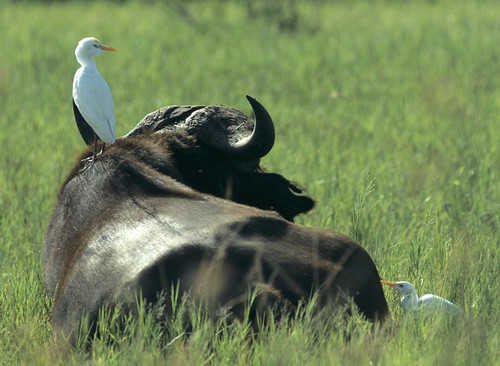
Otherwise the Reserve will be declared a “World Heritage Site in Danger”. The 50,000 km2 reserve is the home of continentally important populations of elephants, lions, leopards, buffaloes, antelopes and wild dogs and has anoutstanding universal biodiversity value.
The CIC said that the Selous as Africa’s largest hunting reserve holds a great
economic potential for the country and for the rural poor living near
the protected
area. Th is potential should not be put at risk through environmentally questionable
and risky investments. The CIC also encouraged the Government to combat
poaching more energetically by providing more of the revenues from
hunting to the reserve and by involving the local people into wildlife management in accordance
with the Tanzanian Wildlife Policy.
==================
La plus importante réserve de chasse africaine en danger
Le Comité du patrimoine mondial (UNESCO) a mis en garde la Tanzanie
contre la mise en exploitation de mines d’uranium dans la Réserve de
gibier de Selous et contre le projet d’y édifi er un important
barrage; ce, préalablement à la publication par ledit Comité de
données concrètes quant aux conséquences écologiques. A défaut, la
Réserve sera inscrite sur la „Liste du patrimoine mondial en péril”.
La réserve, d’une superfi cie de 50 000 km2, abrite des populations
d’éléphants, de lions, de léopards, de buffles, d’antilopes et de
chiens sauvages qui sont importantes à l’échelle du continent
africain. Cette réserve a une valeur exceptionnelle en termes de
biodiversité universelle.
Le CIC (ou : Lors d’un bref séjour en Tanzanie, le Président Bernard
Lozé) a affi rmé que Selous, en sa qualité de réserve de chasse la
plus importante d’Afrique, offre un potentiel économique important
pour le pays et pour les communautés rurales pauvres qui vivent près
de cette zone protégée. Il ne faudrait
pas que des investissement tant risqués, que discutables d’un point de
vue écologique mettent en danger ce potentiel. Le CIC (ou : Il) a
également encouragé le Gouvernement à combattre le braconnage de
manière plus vigoureuse en distribuant davantage de revenus de la
chasse à la réserve et en associant
les populations locales à la gestion de la faune sauvage conformément
à la Politique tanzanienne de la faune sauvage [Tanzanian Wildlife Policy].
===============
Afrikas größtes Jagdreservat in Gefahr
Das Welterbekomitee der UNESCO warnte Tansania davor, mit einer
Urangewinnung zu beginnen und mit den Plänen eines großen Dammbaues im
Selous Wildtierreservat fortzufahren, um schwerwiegende ökologische
Konsequenzen zu verhindern. Bei Nichtbeachtung dieser Warnung wird das
Reservat als „Welterbestätte in Gefahr“ deklariert.
Das 50.000 km2 große Reservat ist das zu Hause von zahlreichen
kontinental bedeutsamen Tierpopulationen von Elefanten, Löwen,
Leoparden, Büffeln, Antilopen
und Wildhunden und hat einen herausragenden universalen Biodiversitätswert.
Der CIC weist darauf hin, dass der Selous als Afrikas größtes
Jagdreservat ein bedeutendes wirtschaftliches Potenzial für das Land
und die ländliche Bevölkerung, die in ärmlichen Verhältnissen nahe dem
geschützten Gebiet lebt, darstellt. Dieses Potential sollte nicht
durch fragliche und bedenkliche Investitionen in Bezug auf die Umwelt
riskiert werden. Der CIC ermutigte die Regierung auch zum intensiveren
Kampf gegen Wilderei indem mehr Einnahmen aus der Jagd an das Reservat
selbst abgegeben werden und die Einwohner gemäß der tansanischen
Wildtierpolitik in das Wildtiermanagement einbezogen werden
Thursday, July 14, 2011
Furadan poisoning kills tens of thousands of wetland birds including migratory species in Bunyala Kenya
Dear all,
WildlifeDirect is stepping up a campaign to have carbofuran, the active ingredient in the deadly pesticide product Furadan, banned in Kenya and East Africa.
Martin Odino who is scientist and an author of the WildlifeDirect blog, Stop Wildlife Poisoning, has reported that despite FMC claims that Furadan is no longer in Kenya, it actually continues to be used to poison tens of thousands of wetland birds in Bunyala rice irrigation scheme in Kenya. The product is coming in from Uganda.
He has documented in photographs and film how the birds are killed by lacing a meal of rice with the poison and laying out in the rice paddies. Ducks and other waders eat it and die shortly thereafter. Insects, reptiles and fish in the water are all killed. Predatory birds pick up the carcases and so the pesticide is affecting a whole chain of species. Open billed storks are killed by lacing snails and using decoys to attract overflying flocks. He claims that up to 50% of each flock that lands in these fields die, and this amounts to some 6,000 bird deaths each month in Bunyala rice irrigation scheme alone. We suspect even higher mortalities in Mwea and Ahero irrigation schemes.
The consequence of poisoning to raptors and migratory birds could be catastrophic.
But its not just birds. The human cost is enormous, the people handling the deadly toxic chemical do so with bare hands. The product is put into the water which is consumed by the community, and the ducks, storks, doves, sandpipes and other speccies that are killed, are sold in local markets as human food.
The evidence is shocking and we will be releasing a short documentary on the same shortly. For latest updates check out http://stopwildlifepoisoning.wildlifedirect.org/
Although FMC claims that Furadan is not available in Kenya, it is permitted for use in the production of flowers in Kenya. Our largest flower farms are by Lake Naivasha, a Ramsar site and an extremely important bird area.
We have submitted reports, attended meetings with the pest control products board and government officials and we are part of the government task force on the impacts of pesticiedes on the environment. That Task force which is under the Ministry of Agriculture and is chaired by the CEO of the PCPB, has not met since September 2010, and few of the actions agreed on have been implemented. We believe that the PCPB is not in a position to attend to the problem due to resource constraints and conflict of interest.
We would like you to share this through your networks, put it on your websites, blogs, facebook and email it to everyone.
Our campaign has two targets.
1. The immediately and total ban on use of carbofuran and other carbamate pesticides in any pesticide control product.
2. We are demanding that the government to move the Pesticide Control Products Board out of the ministry of Agriculture where the organization faces a conflict of interest, and into the Ministry of Environment where it can effectively achieve it's mission "To provide professional, efficient and effective regulatory service for manufacture, trade, safe use and disposal of pest control products while ensuring safety to humans, animals and the environment"
We ask that you support our initiative by circulating information,advise us on funding opportunities to continue the research, monitoring, reporting and education, as well as the advocacy to change the Kenyan laws.
Please circulate this information widely
Kind Regards
Paula Kahumbu
Winner of the National Geographic/Buffet Award for conservation leadership in Africa 2011
Executive Director WildlifeDirect
P.O. Box 24467 - 00502
Kenya
cel + 254 722 685 106
Raise money for wildlifedirect
just by searching the Internet with http://www.goodsearch.com
WildlifeDirect is stepping up a campaign to have carbofuran, the active ingredient in the deadly pesticide product Furadan, banned in Kenya and East Africa.
Martin Odino who is scientist and an author of the WildlifeDirect blog, Stop Wildlife Poisoning, has reported that despite FMC claims that Furadan is no longer in Kenya, it actually continues to be used to poison tens of thousands of wetland birds in Bunyala rice irrigation scheme in Kenya. The product is coming in from Uganda.
He has documented in photographs and film how the birds are killed by lacing a meal of rice with the poison and laying out in the rice paddies. Ducks and other waders eat it and die shortly thereafter. Insects, reptiles and fish in the water are all killed. Predatory birds pick up the carcases and so the pesticide is affecting a whole chain of species. Open billed storks are killed by lacing snails and using decoys to attract overflying flocks. He claims that up to 50% of each flock that lands in these fields die, and this amounts to some 6,000 bird deaths each month in Bunyala rice irrigation scheme alone. We suspect even higher mortalities in Mwea and Ahero irrigation schemes.
The consequence of poisoning to raptors and migratory birds could be catastrophic.
But its not just birds. The human cost is enormous, the people handling the deadly toxic chemical do so with bare hands. The product is put into the water which is consumed by the community, and the ducks, storks, doves, sandpipes and other speccies that are killed, are sold in local markets as human food.
The evidence is shocking and we will be releasing a short documentary on the same shortly. For latest updates check out http://stopwildlifepoisoning.wildlifedirect.org/
Although FMC claims that Furadan is not available in Kenya, it is permitted for use in the production of flowers in Kenya. Our largest flower farms are by Lake Naivasha, a Ramsar site and an extremely important bird area.
We have submitted reports, attended meetings with the pest control products board and government officials and we are part of the government task force on the impacts of pesticiedes on the environment. That Task force which is under the Ministry of Agriculture and is chaired by the CEO of the PCPB, has not met since September 2010, and few of the actions agreed on have been implemented. We believe that the PCPB is not in a position to attend to the problem due to resource constraints and conflict of interest.
We would like you to share this through your networks, put it on your websites, blogs, facebook and email it to everyone.
Our campaign has two targets.
1. The immediately and total ban on use of carbofuran and other carbamate pesticides in any pesticide control product.
2. We are demanding that the government to move the Pesticide Control Products Board out of the ministry of Agriculture where the organization faces a conflict of interest, and into the Ministry of Environment where it can effectively achieve it's mission "To provide professional, efficient and effective regulatory service for manufacture, trade, safe use and disposal of pest control products while ensuring safety to humans, animals and the environment"
We ask that you support our initiative by circulating information,advise us on funding opportunities to continue the research, monitoring, reporting and education, as well as the advocacy to change the Kenyan laws.
Please circulate this information widely
Kind Regards
Paula Kahumbu
Winner of the National Geographic/Buffet Award for conservation leadership in Africa 2011
Executive Director WildlifeDirect
P.O. Box 24467 - 00502
Kenya
cel + 254 722 685 106
Raise money for wildlifedirect
just by searching the Internet with http://www.goodsearch.com
Monday, June 6, 2011
FURADAN is history! Good news for our birds!!
Don’t know if you all saw this but FMC just lost the court case/appeal to sell Furadan...detail below. It is an important move. Many of us have been working on this for some years and its been a back and forth battle but with at least the tunnel if not the light at the end, in sight.
For any doubters, and for clarity, the Petition that Defenders filed recently gave voice and substance to this matter and it was the primary reason for its design and submission.
Subject: Supreme Court rejects pesticide case
Supreme Court rejects pesticide case
Decision stands to prohibit use of carbofuran in domestic food production
WASHINGTON, D.C. (May 31, 2011) - The U.S. Supreme Court denied a petition today to reconsider the U.S. Environmental Protection Agency's ban on domestic food tolerances for carbofuran, a deadly pesticide used in food production. FMC Corporation, the leading manufacturer of carbofuran, and a group of powerful agribusiness lobbyists including the National Corn Growers Association, have repeatedly challenged a 2009 rule from the Environmental Protection Agency to revoke all food tolerances. EPA has shown that dietary exposure to carbofuran is unsafe for humans. In 2006, EPA announced that all uses of carbofuran should be cancelled because of occupational and ecological risks to humans and wildlife.
The following is a statement from Jason Rylander, senior attorney for Defenders of Wildlife:
"The Supreme Court's refusal to hear the case allows EPA's decision to stand. The EPA decision confirmed what we've been saying for years: carbofuran is a deadly poison that has absolutely no place in our food or the environment. The Court's action means that, in this case, the health and safety of the American people and our nation's wildlife have trumped the profits of powerful corporations.
"EPA made the right decision in 2009 to revoke all food tolerances for carbofuran and should take further action to cancel the use of carbofuran altogether. There is absolutely no reason to continue using this substance in the U.S. or anywhere else.
"Carbofuran has killed millions of birds and other wildlife in the U.S. alone for decades. Preventing its use domestically was a critical step, but our job is not finished. Foreign countries still use carbofuran on food imported in the U.S., and in places like Africa, it's even being used illegally to poison animals like African lions, which Defenders has petitioned the Secretary of the Interior to list as an endangered species. As long as this dangerous pesticide stays in circulation, people and wildlife around the world will remain at risk. We hope this decision influences other nations still using carbofuran to reconsider its use in their country. We are committed to assisting our international conservation partners in putting an end to the use of carbofuran and other dangerous pesticides."
Background:
In August 2006, EPA <http://www.defenders.org/newsroom/press_releases_folder/2006/08_03_2006_pesticide_ban_follows_millions_of_bird_deaths.php> published its Interim Re-registration Eligibility Decision and concluded that no uses of carbofuran were eligible for re-registration because of ecological and occupational risks. In response, some uses were voluntarily withdrawn. EPA plans to proceed with cancelling remaining uses through its cancellation process.
On May 15, 2009, EPA issued a final rule revoking all domestic and imported food tolerances for carbofuran, and that rule went into effect at the end of 2009 <http://www.defenders.org/newsroom/press_releases_folder/2009/12_15_2009_court_rules_against_fmc_corporation,_pesticide_users.php> . FMC Corporation, the leading manufacturer of carbofuran, along with powerful lobbying groups for the food industry challenged these decisions in federal court and were successful in getting a federal court to allow some imports containing carbofuran to continue entering the country. FMC then appealed to the Supreme Court to reinstate domestic food tolerances for carbofuran.
__._,_.___
Friday, May 27, 2011
NEW species for Tanzania - Nguru? Greenbul
Diversification across an altitudinal gradient in the Tiny Greenbul (Phyllastrephus debilis) from the Eastern Arc Mountains of Africa.
John Fjeldsaa and his team have made it again, and found a new species for Tanzania!
Read the exciting story of the Tiny Greenbul and the new (My suggestion (Nguru Greenbul) still unnamed?) greenbul from Nguru Mts. and W. Usambara Mts. The blue spots on the map shows where the new sp. occurs. This gives TZ at least 1130 species!!
Stein
http://www.biomedcentral.com/1471-2148/11/117

Distribution of Phyllastrephus debilis; dots represent our sampling localities (blue: albigula; green, rabai; red, debilis). The painting depicts the typical plumage of P. d. albigula and P. d. rabai/debilis, respectively.
John Fjeldsaa and his team have made it again, and found a new species for Tanzania!
Read the exciting story of the Tiny Greenbul and the new (My suggestion (Nguru Greenbul) still unnamed?) greenbul from Nguru Mts. and W. Usambara Mts. The blue spots on the map shows where the new sp. occurs. This gives TZ at least 1130 species!!
Stein
http://www.biomedcentral.com/1471-2148/11/117

Distribution of Phyllastrephus debilis; dots represent our sampling localities (blue: albigula; green, rabai; red, debilis). The painting depicts the typical plumage of P. d. albigula and P. d. rabai/debilis, respectively.
Sunday, May 8, 2011
Uluguru Violet-backed Sunbird
fantastic image of an adult female from Tony Evans, note the lack of colour on the face and then check the fieldguides.......
Neil  |
| Cropped - see original below. |

Subscribe to:
Posts (Atom)